 Event Videos »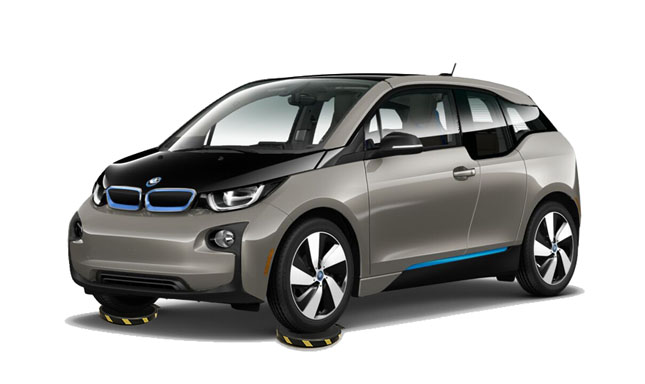
Young adults ages 16-20 have the highest fatality and injury rates - 4 times of other age groups. Over 5,000 teenagers die in motor vehicle crashes every year. The main reason - driver error. These numbers suggest that additional young adult driver training and more practice in anticipating varying driving conditions will save lives. By combining innovative driver education with some entertainment elements, the Drive Square Simulation System™ promotes better training.
If your driving school provides driver training above and beyond just passing a driver’license test, the Drive Square Simulator is the right tool for you. Training on a simulator is not about replacing scarce behind-the-wheel driving hours. It is about making safer drivers through exposure to hard to replicate experiences.
For example, one of the biggest problems is that newly-licensed drivers rarely look in the right spot to anticipate a possible hazard.
While working on a driving research project, Prof. Donald Fisher at the University of Massachusetts (UMASS) compared inexperienced and experienced drivers in a simple experiment. A driver was given the task of driving by a large truck parked at the curb in front of a crosswalk. The experienced drivers slowed down and looked at the front of the truck, anticipating the possibility of a pedestrian walking out. Only a fraction of newly-licensed drivers did the same.
Most novice drivers are being told to look for potential hazards in the areas with obstructed view, but they forget it when it comes to actual driving. Driving on a simulator helps to demonstrate to them the mechanics of how a potential collision may happen and experience it first hand in the simulator. Repeated experiences can be used to reinforce the lesson.
You can read about our research conducted with UMASS Human Performance Lab. The research was sponsored by National Institutes of Health (NIH) and CDC.
In the real world the above lesson may cost somebody’s life. However these scenarios can be clearly demonstrated and practiced on a driving simulator. A few other examples of situational awareness and risk management are:
Dangerous driving situations cannot be safely practiced behind the wheel, but they can be practiced on a simulator. Furthermore such driving scenarios can be consistently practiced by every student.
While actual behind-the-wheel driving can never be replaced, it cannot teach a student to correctly anticipate many road hazards in a typical (in the US) 6 hours time allotted for this.
Drive Square makes high-fidelity full-vehicle driving simulators.
Driver Safety training on the Drive Square Simulator is supported by the following software packages: Adiona™ and STISIM.
Since Drive Square Simulators are the most versatile driving simulators on the market there are a few additional benefits to owning one:
When not using the simulator for driver training, take it to your local high school. You can set it up in front of the school in less than 20 minutes and give short 3-5 min demonstration sessions showing teenagers the dangers of drunk driving, driving and texting or a cell phone use. Kids love this simulator. The enrollment to your driving school will soar.
Wherever you go, the Simulator is a media magnet. Take a look at some of the news clips.
Your local auto dealer may be able to provide you with a vehicle for the simulator if you take it to a community safety event, a mall or a trade show.
For pricing and additional information:
e-mail: sales@drivesquare.com or
call 1-617-762-4013 x.2